
GScopy Endoscopy, software for endoscopy clinics
Desktop app for Windows and macOS: patients, endoscope capture, image annotation and PDF reports, with an encrypted local database.
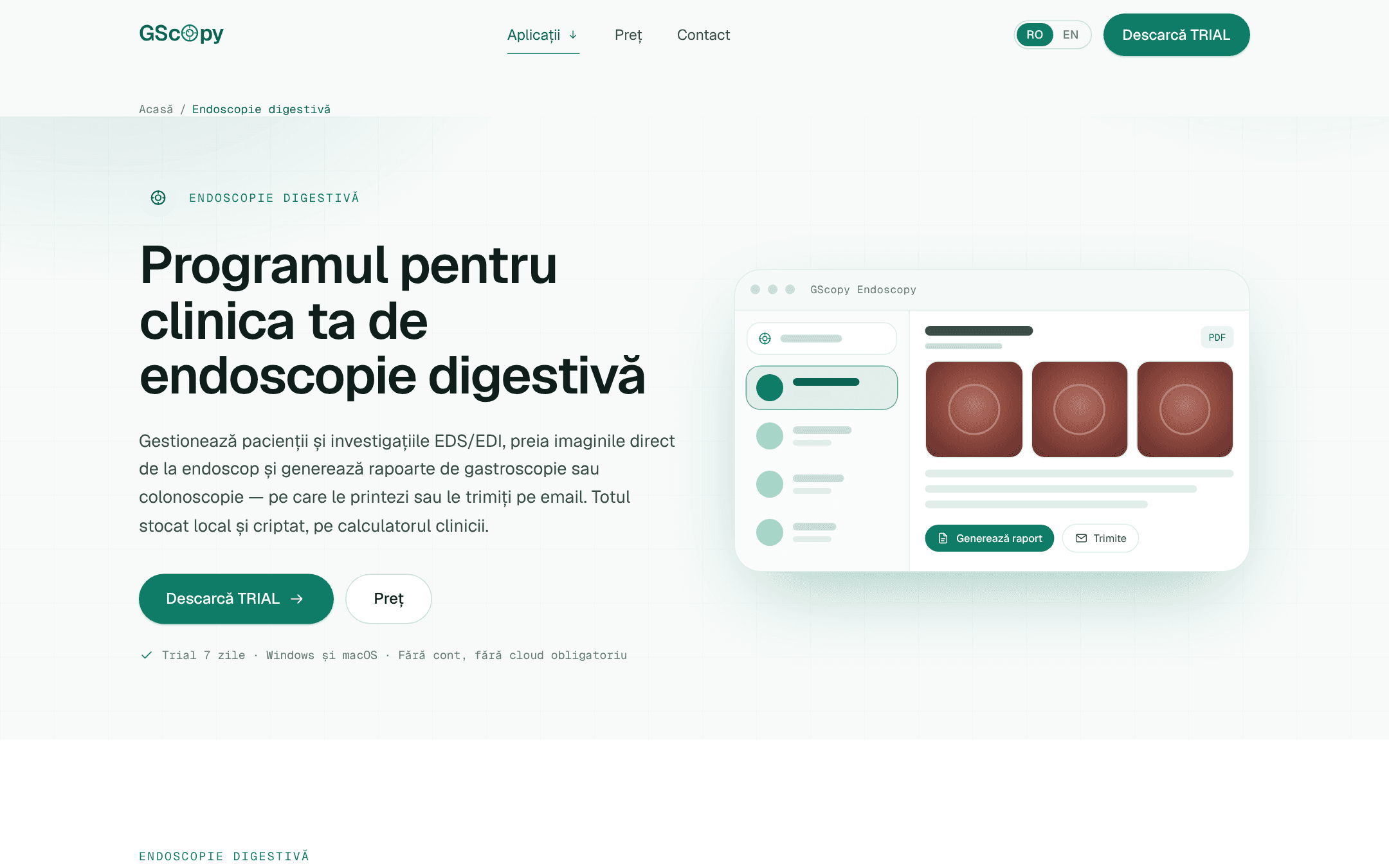
GScopy Endoscopy is a desktop application for digestive endoscopy clinics. It keeps patient records, takes the images straight from the endoscope during the examination, and generates the gastroscopy or colonoscopy report as a PDF. It runs on Windows and macOS, on one computer, and the data stays there.
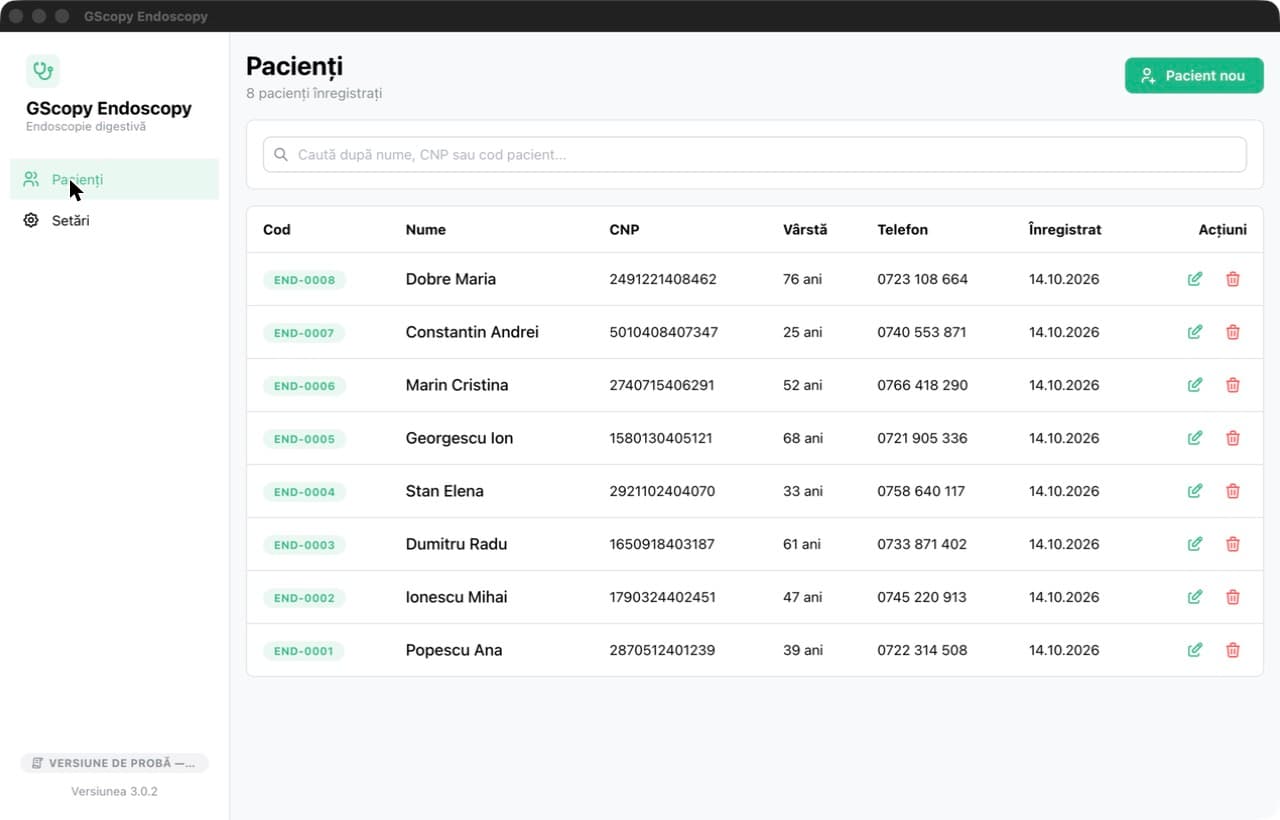
Clinics were working with an old application that froze often
The clinics we built GScopy for had an old, sluggish application with a dated interface that froze often.
The patient is entered by personal ID and the app fills in the rest
The Romanian personal ID (CNP) is validated on entry, and sex and date of birth are filled in from it. Age is calculated live. The patient code has a configurable prefix, for example END-0001.
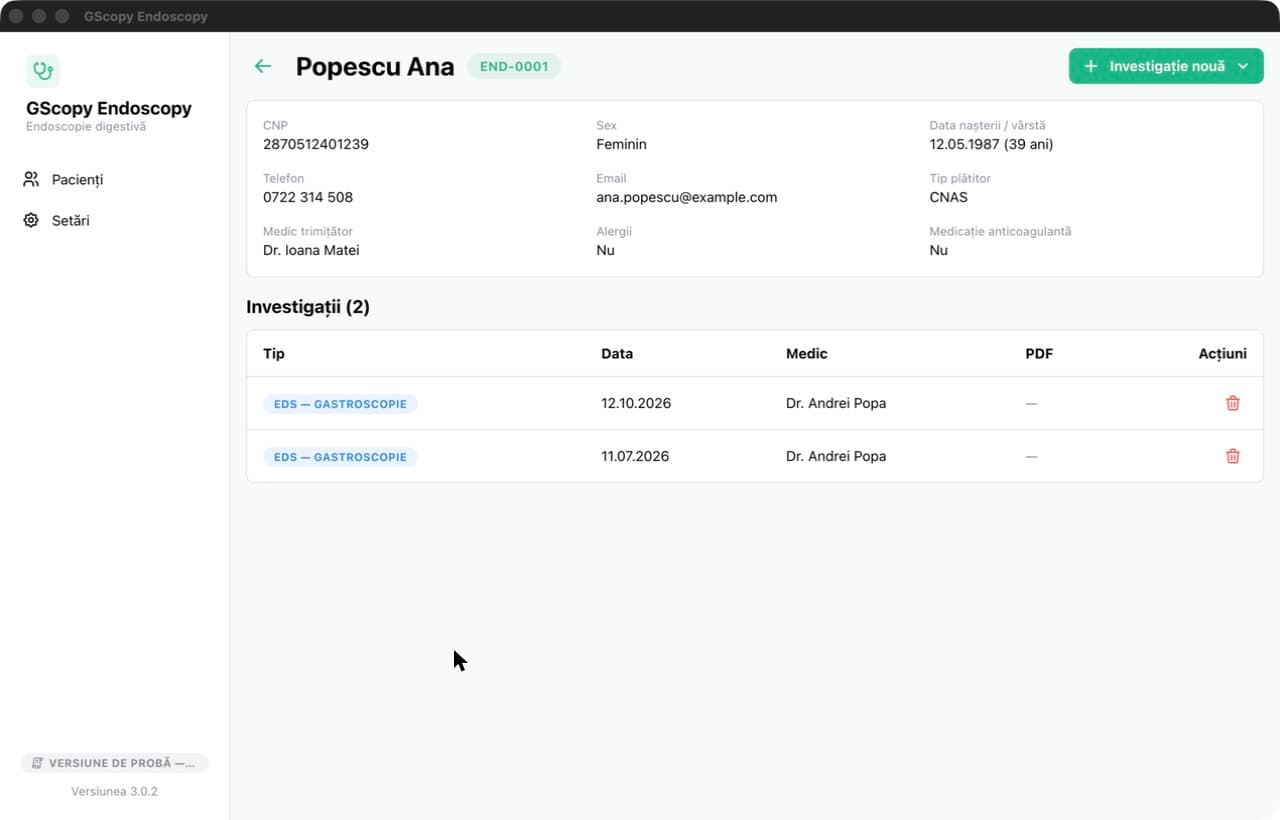
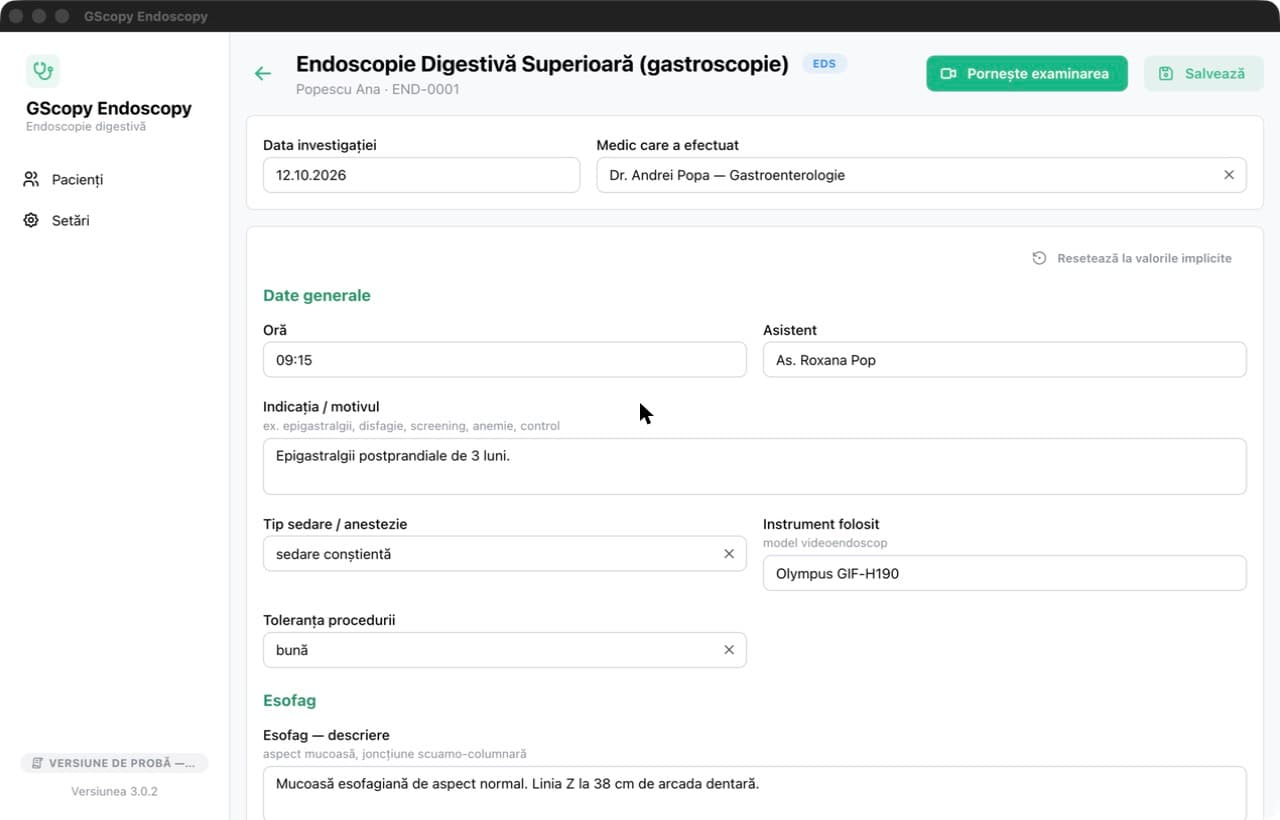
Each investigation has its own form: EDS for gastroscopy, EDI for colonoscopy. The fields are defined in the database, so the clinic adds, edits and reorders them from Settings, and the code stays untouched. A field can have a default value such as "normal", pre-filled on every new investigation.
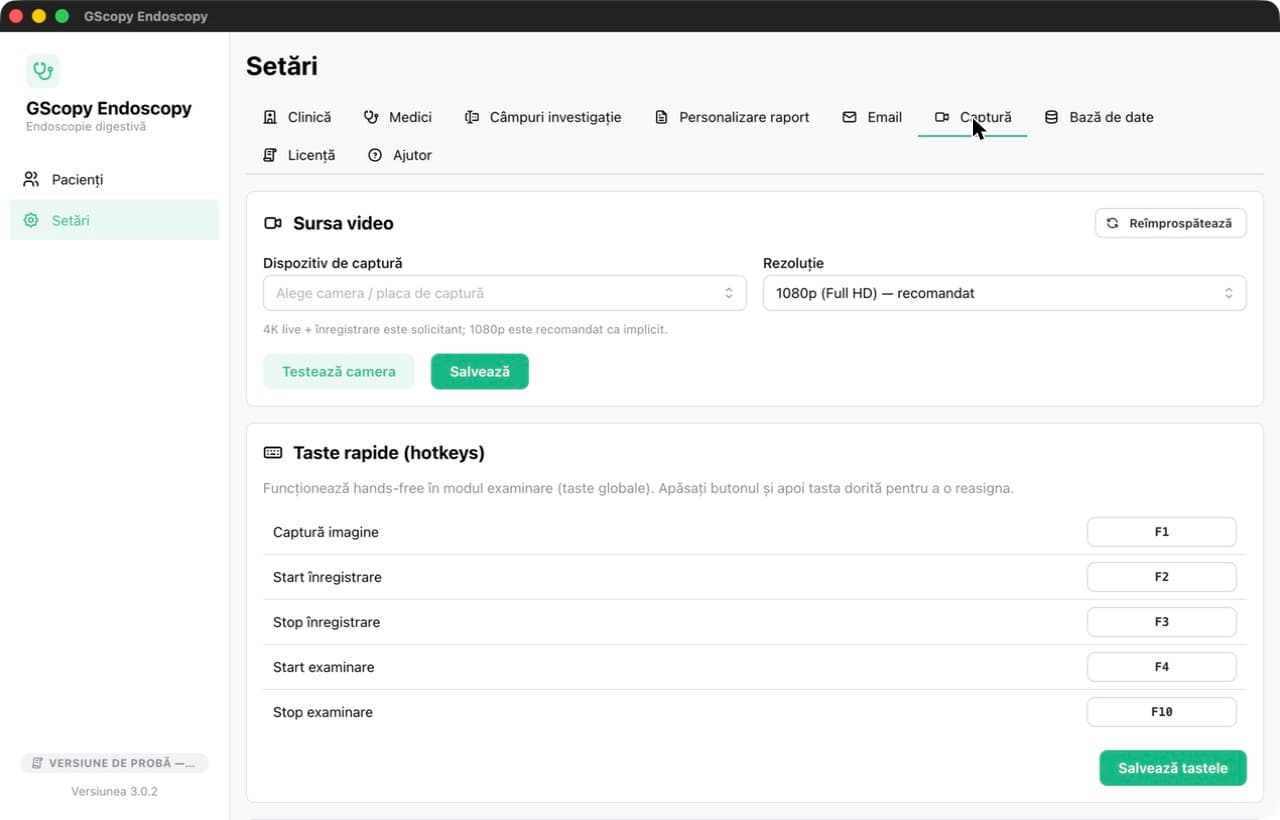
Images are captured from a foot pedal or the F1 and F2 keys
The capture card is chosen in Settings, and the recommended resolution is 1080p. In examination mode the default keys are F1 for an image capture, F2 and F3 to start and stop recording, F4 and F10 to begin and end the examination. The pedal works either as key emulation or as an HID device read through node-hid. We tested with a wide range of endoscopes, including Fuji and Sonoscape, with a USB pedal and USB capture cards.
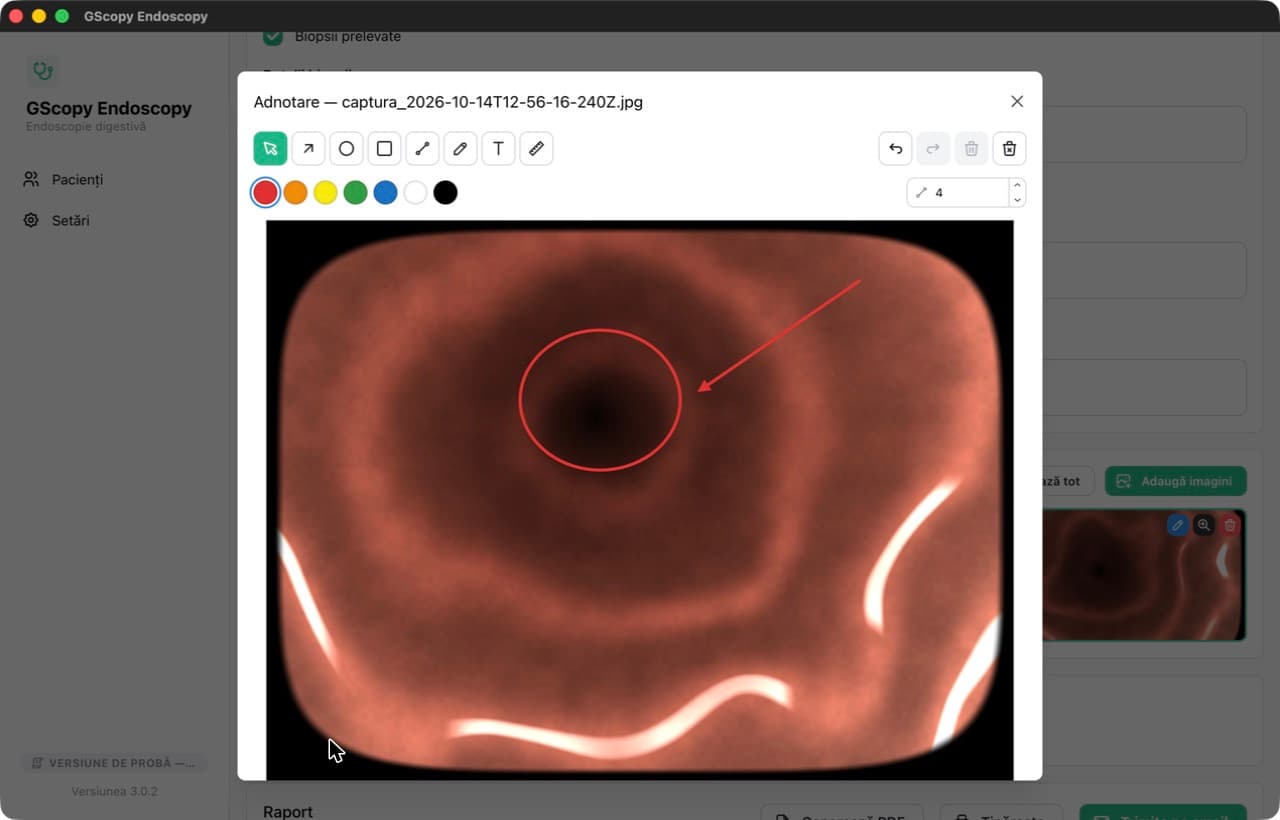
Annotation never changes the original image
You draw arrows, circles, rectangles, lines, text and approximate measurements on the image. The marks are vector shapes and stay editable. The original is never modified, and the report uses a flattened copy.
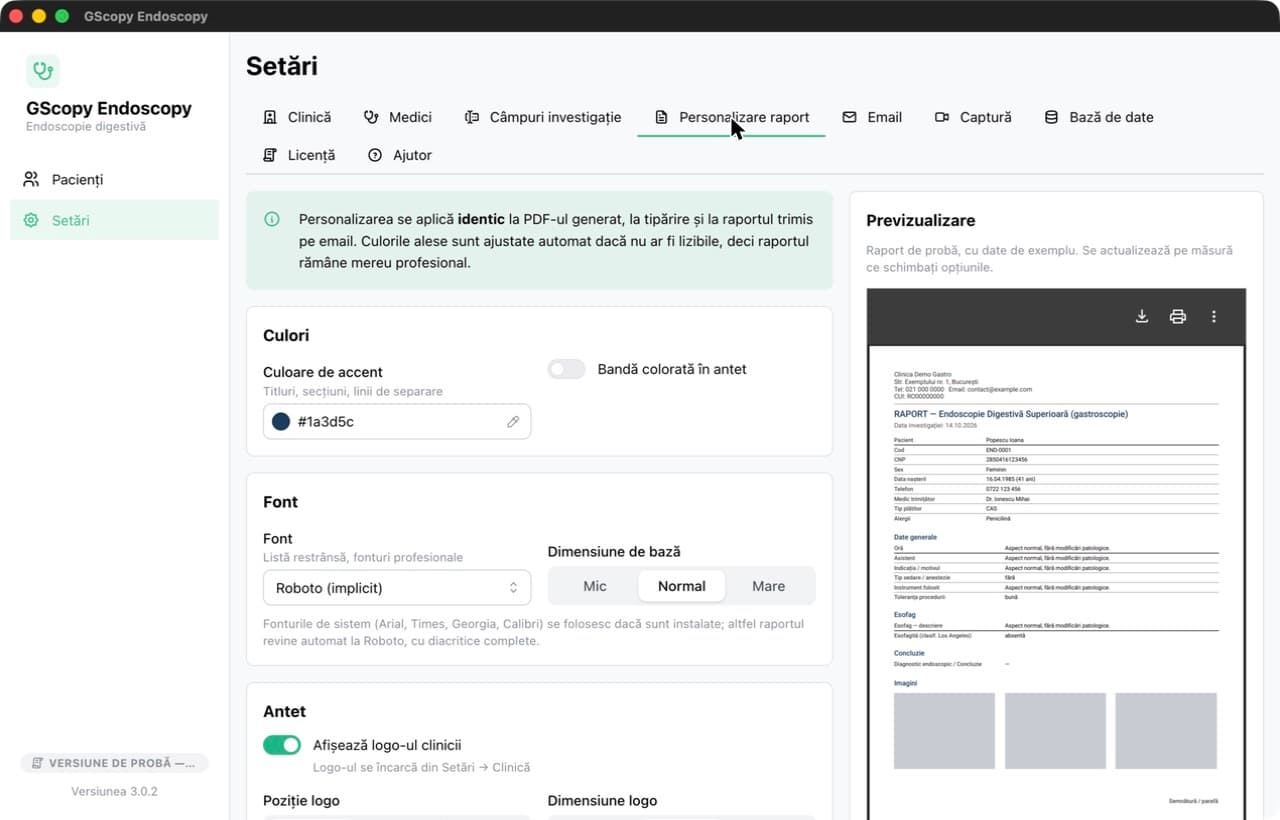
The PDF report carries the clinic's header and colors
The report holds the clinic details and logo, the patient data, the completed fields and the ticked images. It is saved automatically in the investigation folder, printed, or emailed with the PDF attached, optionally password-protected. From Settings you change the accent color, font, header, footer and section order, with a live preview.
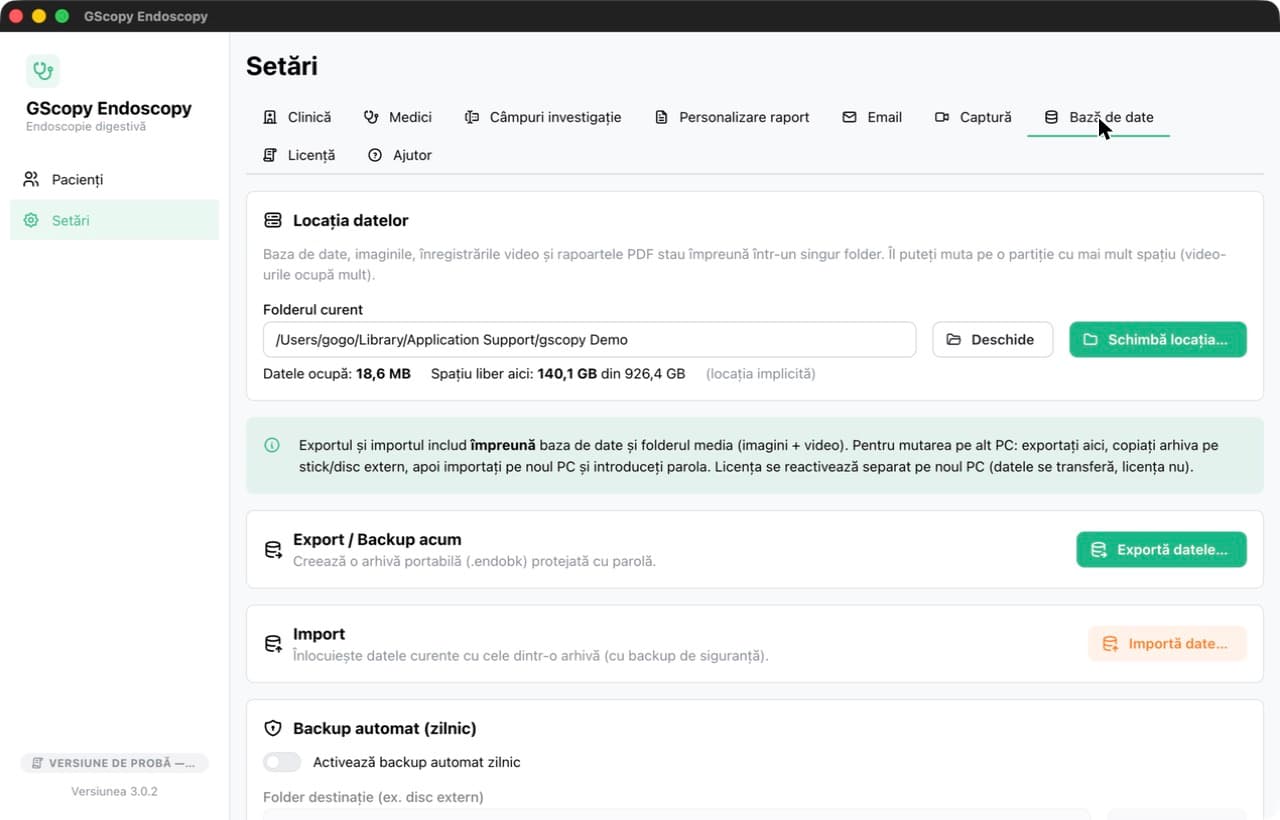
The database is encrypted and the key is stored apart from the data
The SQLite database is encrypted with better-sqlite3-multiple-ciphers. The key is generated randomly on first launch and protected by the operating system, through DPAPI on Windows and Keychain on macOS. The .endobk export holds the database and the media files under a password. The daily backup keeps the last N copies, and the data folder moves to another disk by copying and verifying first.
One core, two specialties
The specialty is chosen at build time through the GSCOPY_PROFILE variable. Two installers come out of the same core: Endoscopy, available now, and Gynecology for colposcopy, listed on the site as "coming soon". Each has its own update channel, data folder and license key, signed offline with Ed25519.
A 7-day trial, then a one-time 1,000 EUR
The trial lasts 7 days and needs no account. After it expires, new patients and investigations are blocked and reports get a "TRIAL" watermark; existing data stays readable. The launch price is 1,000 EUR for one application (standard 2,000 EUR) and 1,600 EUR for both (standard 2,199 EUR). Support is optional, 50 EUR a month or 500 EUR a year.
The first commit dates from 22 June 2026; src now holds about 13,000 lines of TypeScript. GScopy already runs in two clinics, one in Dolj county and one in Olt county.